

It has been more than two decades since Michael Grieves introduced the conceptual foundation of digital twins during product lifecycle management (PLM) research at the University of Michigan. Originally termed the “Information Mirroring Model” in 2002, Grieves envisioned a framework linking three elements: a physical asset, its virtual representation, and the data connections synchronizing the two. This concept revolutionized engineering by connecting static digital models directly to real-world operational data.
Since then, the concept has gained massive traction as organizations pursue digital transformation strategies centered on operational efficiency and predictive maintenance. Yet, commercialization has lagged behind early enthusiasm. Progress remains constrained by several persistent challenges:
The landscape is beginning to shift. Advances in IoT connectivity, hyperscale cloud computing, and AI-driven analytics are lowering adoption barriers. Standardized protocols such as OPC UA and MQTT are reducing integration friction, while managed services from AWS and Azure are easing the infrastructure burden.
Despite these tailwinds, adoption remains concentrated among early adopters. This report uses the Tolaga Intelligence platform to examine the remaining barriers to adoption and outlines the conditions required for digital twins to scale more broadly.
To surface these insights, the Tolaga Intelligence platform analyzed web metadata from the January 2026 Common Crawl archive. Using custom NLP and regex-based filtering, we isolated digital twin-related links from the Web Archive Transformation (WAT) dataset that consists of 2.3 billion records. Our AI engine then classified and ranked this content to distinguish between "market noise" (vendor marketing/news) and "market signal" (validated research and deployment).
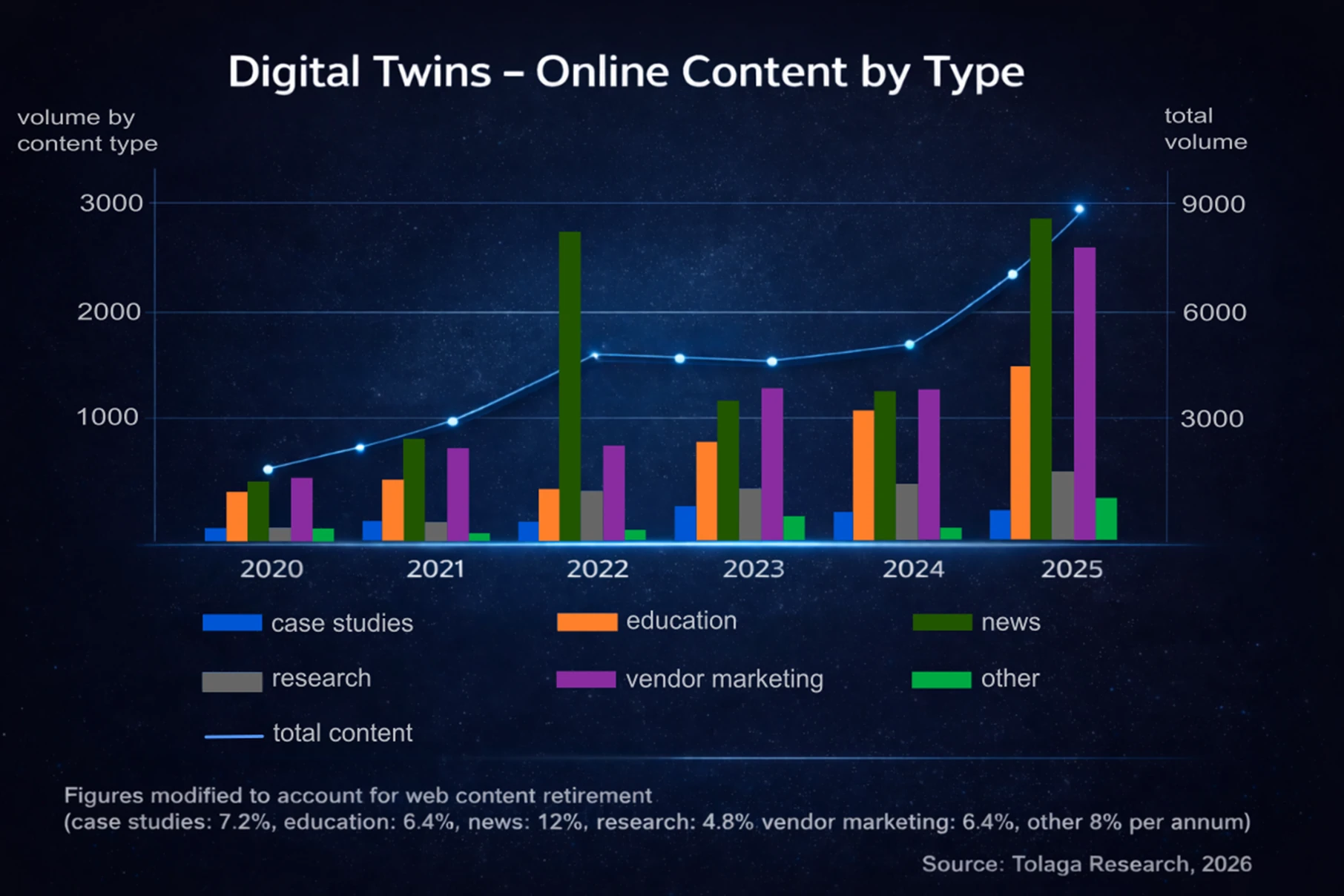
Learn MoreThe total volume of digital twin–related content, adjusted for annual web retirement, increased at a 36% compound annual growth rate (CAGR) between 2020 and 2025. While this indicates surging interest, the composition of that content reveals a significant "Implementation Gap."
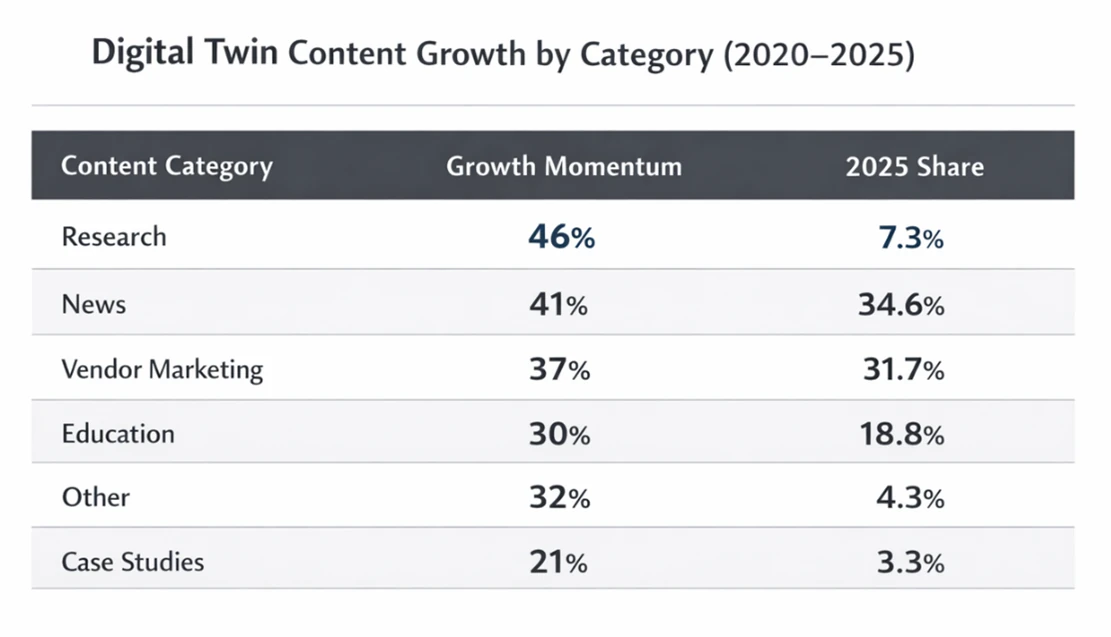
In 2025, news and vendor marketing together accounted for 66% of digital twin content, while case studies accounted for just 3.3%.
These patterns point to strong growth in market attention. However, the high share of educational, research, and promotional material suggests the industry remains in an awareness-building and ecosystem development phase.
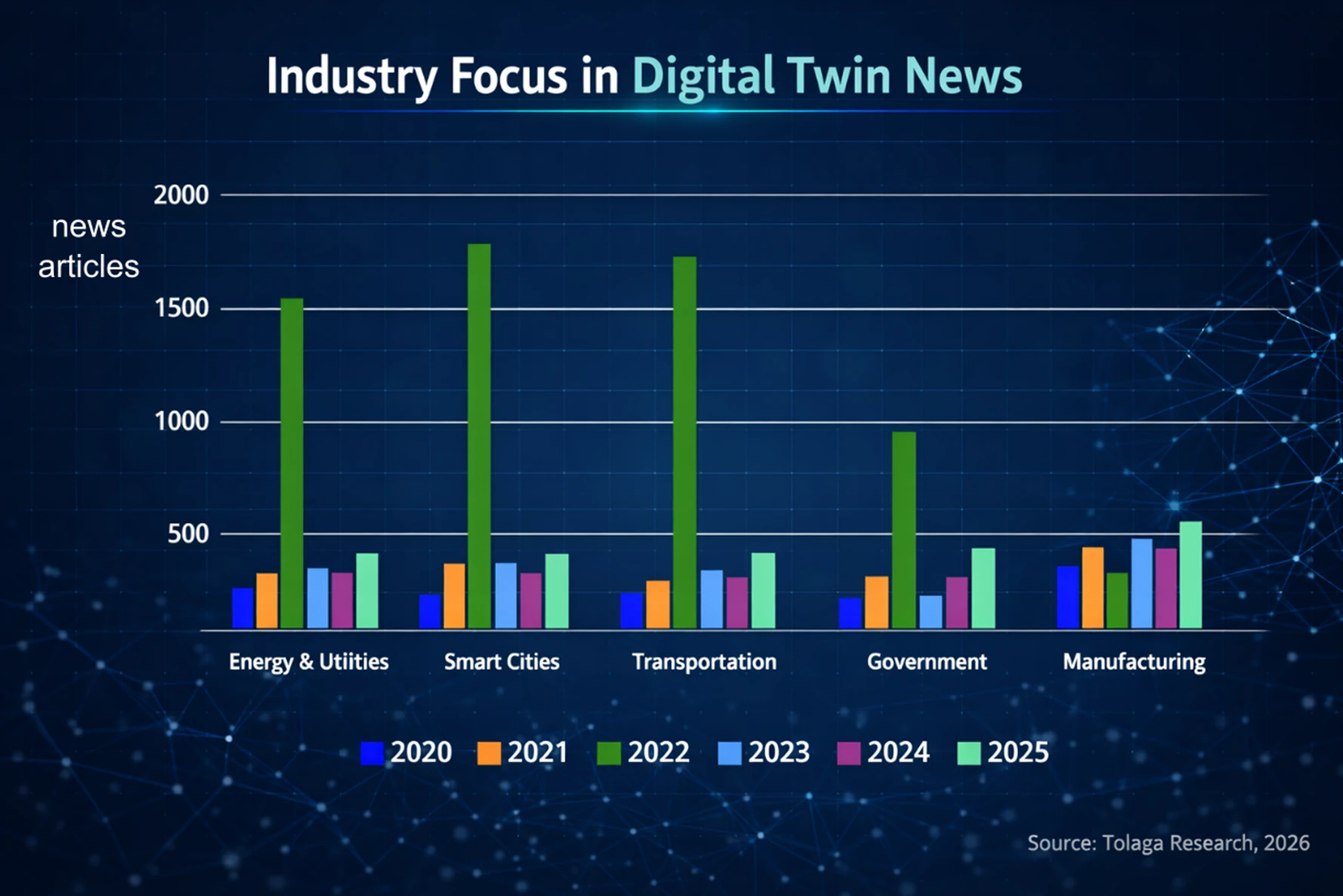
Additional signals from the dataset provide further insight into how the market has evolved. For example, news coverage spiked around 2022, coinciding with a wave of announcements across energy, utilities, smart cities, and transportation. Notably, many announcements referenced multiple sectors simultaneously.
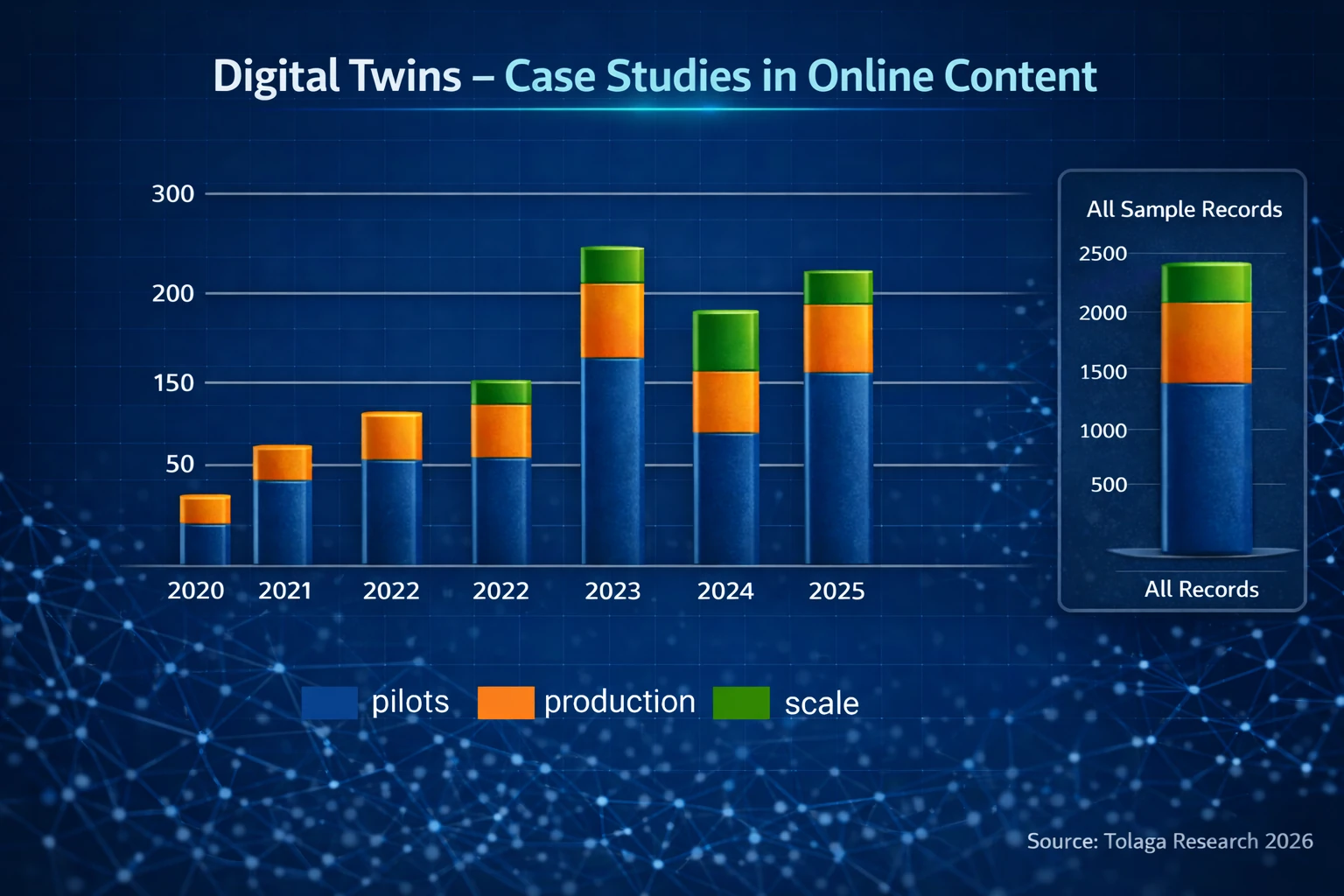
In 2025, more than 65% of digital twin case study announcements were related to pilot projects. Across the full January 2026 Common Crawl WAT sample, pilots still accounted for 51% of announcements, including records that could not be reliably date-stamped. While pilot initiatives are often more likely to be publicized than routine operational deployments, their high share reinforces the view that the digital twin market remains at an early stage.
Digital twin applications span a wide range of industries. Despite this diversity, several core use cases such as condition monitoring, predictive maintenance, and operational optimization are common across sectors. These shared capabilities create opportunities for cross-industry synergies and scale.
However, these synergies are often underemphasized because digital twin ecosystems tend to develop within industry silos. As a result, initiatives remain fragmented, requiring significant education by technology vendors and slowing broader market progress.
Industry diversity, therefore, represents both a strength and a challenge for the digital twin market. The breadth of digital applications creates opportunities for knowledge transfer and scale, but it also contributes to fragmentation and complicates market positioning.
Analysis from the Tolaga Signals platform identified meaningful activity across 17 industry verticals, with manufacturing clearly dominating. The platform ranks these industries based on the volume of digital twin-related content published, as well as the quality of that content, measured by indicators such as relevance, authority, economic signals, and evidence of real-world deployments.
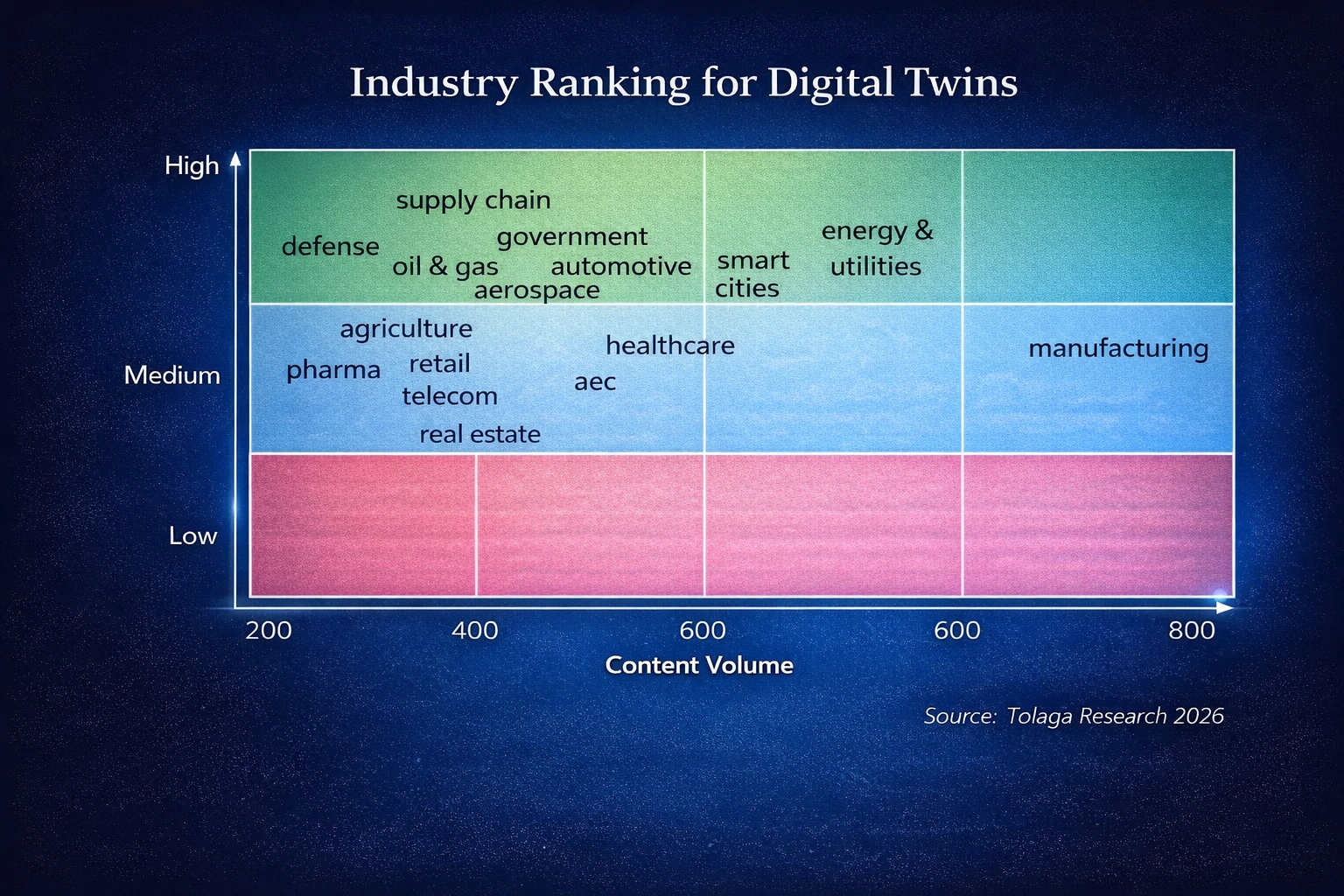
Manufacturing has emerged as the leading sector for digital twin adoption, both in terms of content volume and quality, with applications that focus on improving the design, operation, and maintenance of production systems. Common use cases include predictive maintenance of equipment, production line optimization, and virtual commissioning of automation systems before physical deployment. Digital twins are also widely used in product design and engineering simulation, quality control, factory layout optimization, supply chain planning, energy management, and workforce training. Together, these applications help manufacturers increase efficiency, reduce downtime and waste, accelerate product development, and improve operational performance.
Other sectors, including energy and utilities, healthcare, architecture, engineering and construction (AEC), and aerospace are also attracting significant attention. In energy and utilities, digital twins are used to monitor and optimize critical infrastructure such as power plants, grids, pipelines, and renewable energy assets. These models support asset performance monitoring, predictive maintenance, grid balancing, renewable integration, and long-term network planning.
In healthcare, digital twins are used to model patients, medical devices, and hospital systems. Patient digital twins combine clinical records, imaging, genomic data, and wearable device data to simulate disease progression and treatment responses. Additional applications include medical device simulation, hospital workflow optimization, and monitoring of critical equipment.
In AEC, digital twins are used to improve building and infrastructure design, construction coordination, and long term asset management. They support building performance simulation, construction planning, operational monitoring, predictive maintenance, energy optimization, and lifecycle management of large infrastructure assets such as airports and bridges.
In aerospace, digital twins are used across the lifecycle of aircraft and spacecraft. During development, they support aerodynamic and structural simulation, while in service, they ingest sensor data to monitor performance, predict maintenance needs, and optimize fleet operations.
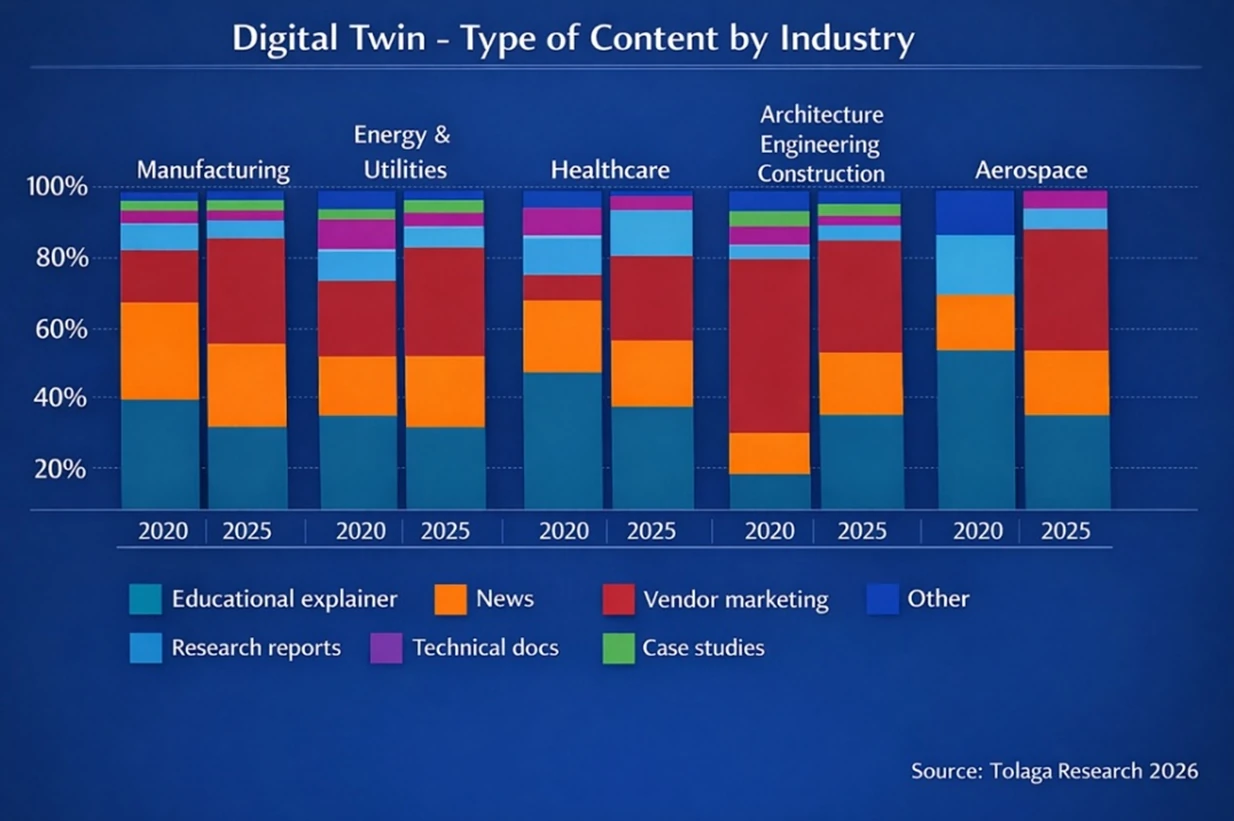
Between 2020 and 2025, the share of vendor marketing content increased across most industries. AEC was the exception, where growth was more concentrated in educational content.
The positioning of digital twins is increasingly shaped by the broader ecosystems they both support and depend on. As these ecosystems evolve, digital twins may either be absorbed into more dominant technology stacks or strengthened by them. The outcome will depend on how industry strategies develop and how these ecosystems take shape in the market.
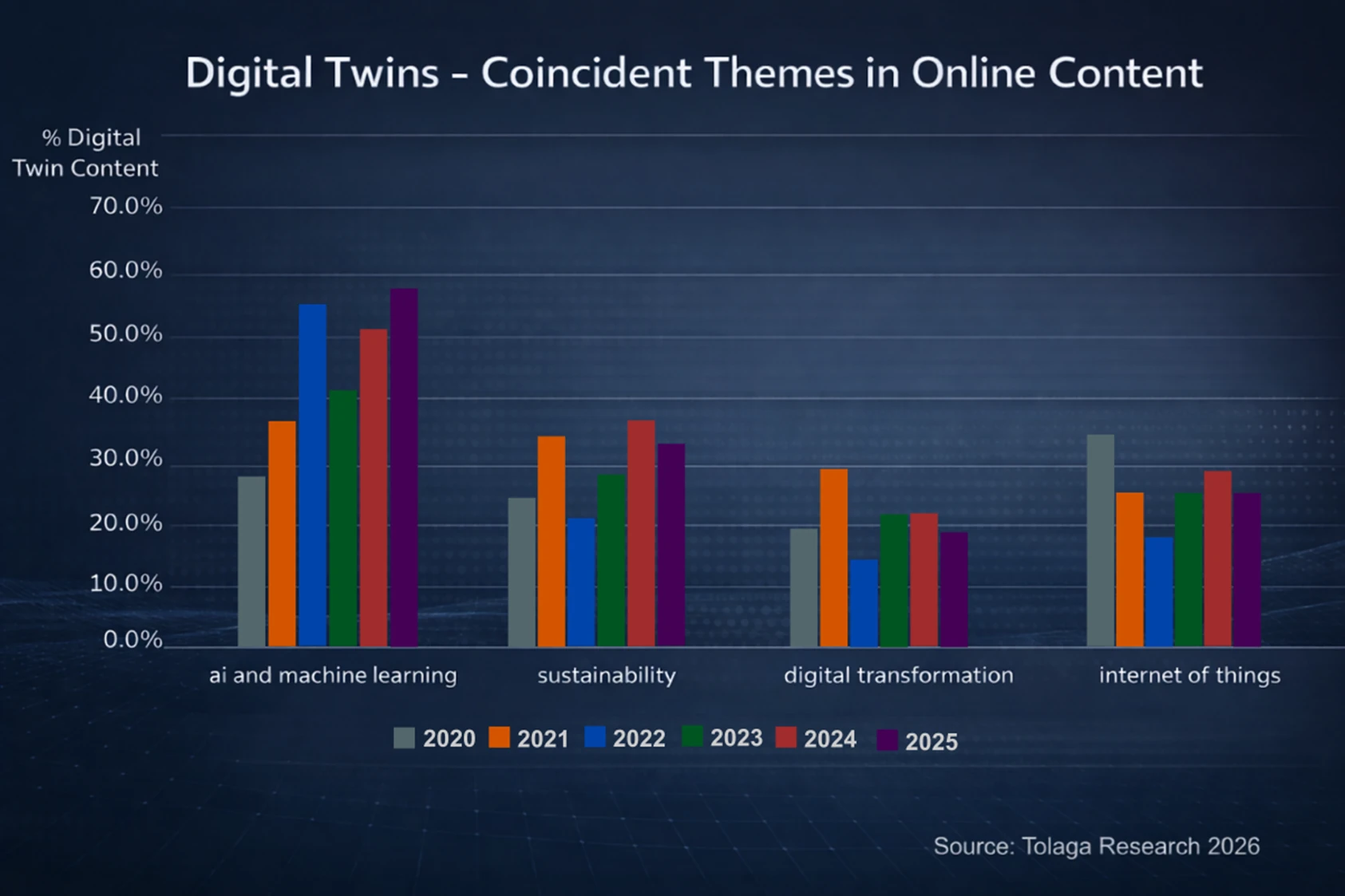
One way to assess this dynamic is to examine the companion themes present in digital twin–related content. In 2025, 65% of such content referenced AI and machine learning, up from 38% in 2020. Sustainability appeared in 21% to 38% of content, while digital transformation featured in 15% to 30% over the same period. In contrast, references to IoT declined from 35% in 2020 to 27% in 2025, reflecting its maturation as an enabling technology.
AI and machine learning will remain central, particularly as the market shifts toward agentic AI and higher levels of automation and autonomy.
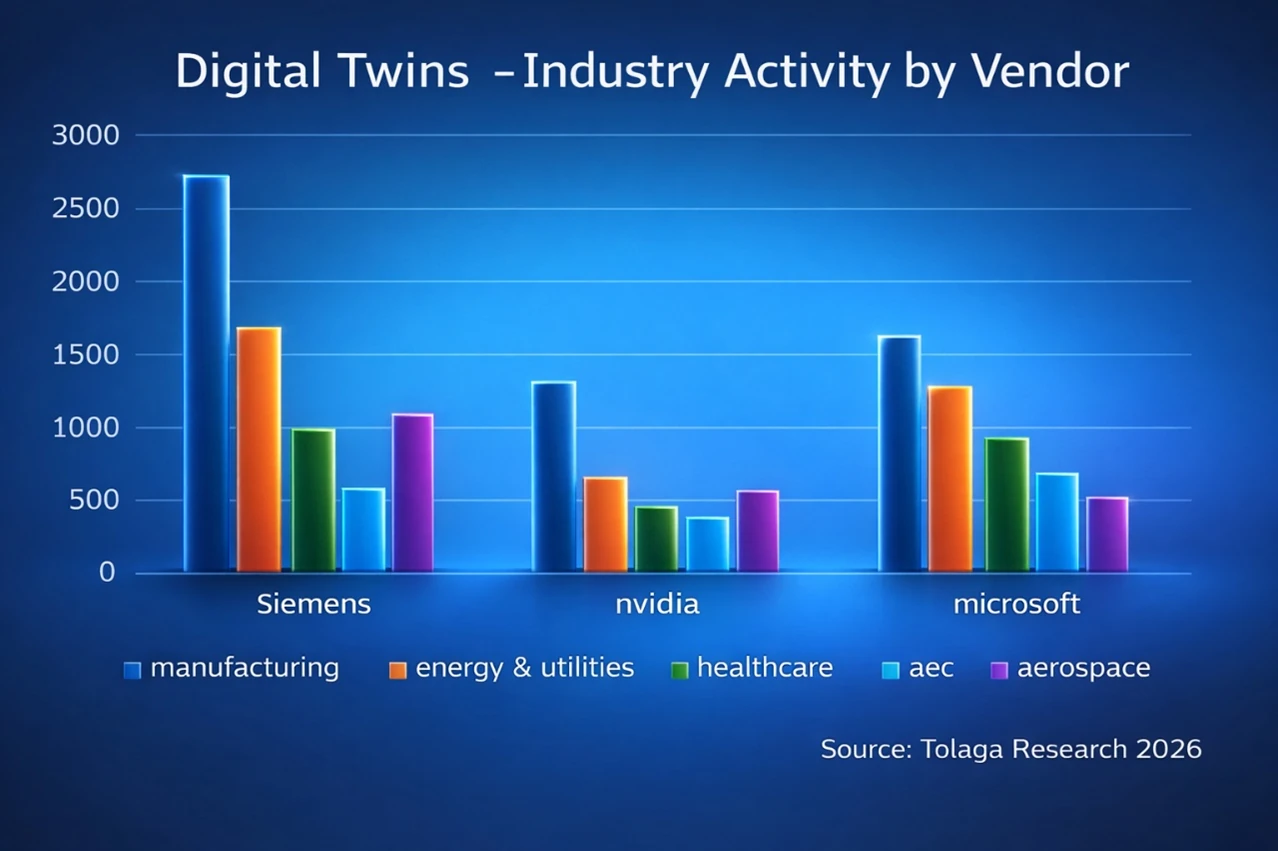
Siemens, Nvidia, and Microsoft are leading digital twin players and play a central role in driving market adoption.
Siemens' digital twin offering, built around Xcelerator, is strongest in manufacturing, energy, and industrial infrastructure, where it combines real-time data with simulation to model complex assets. This enables optimization of production systems, power networks, and infrastructure across the asset lifecycle.
NVIDIA's digital twin offering, centered on Omniverse, is strongest in AI-driven simulation, robotics, and smart infrastructure, using high-performance computing and real-time rendering to model complex environments. This enables optimization of autonomous systems, industrial operations, and next-generation data center and robotics deployments.
Microsoft's digital twin offering, built on Azure Digital Twins, is strongest in smart buildings, cities, and enterprise infrastructure, where it connects real-time data with cloud-based models of physical environments. This enables optimization of operations, energy use, and space management across large-scale systems.
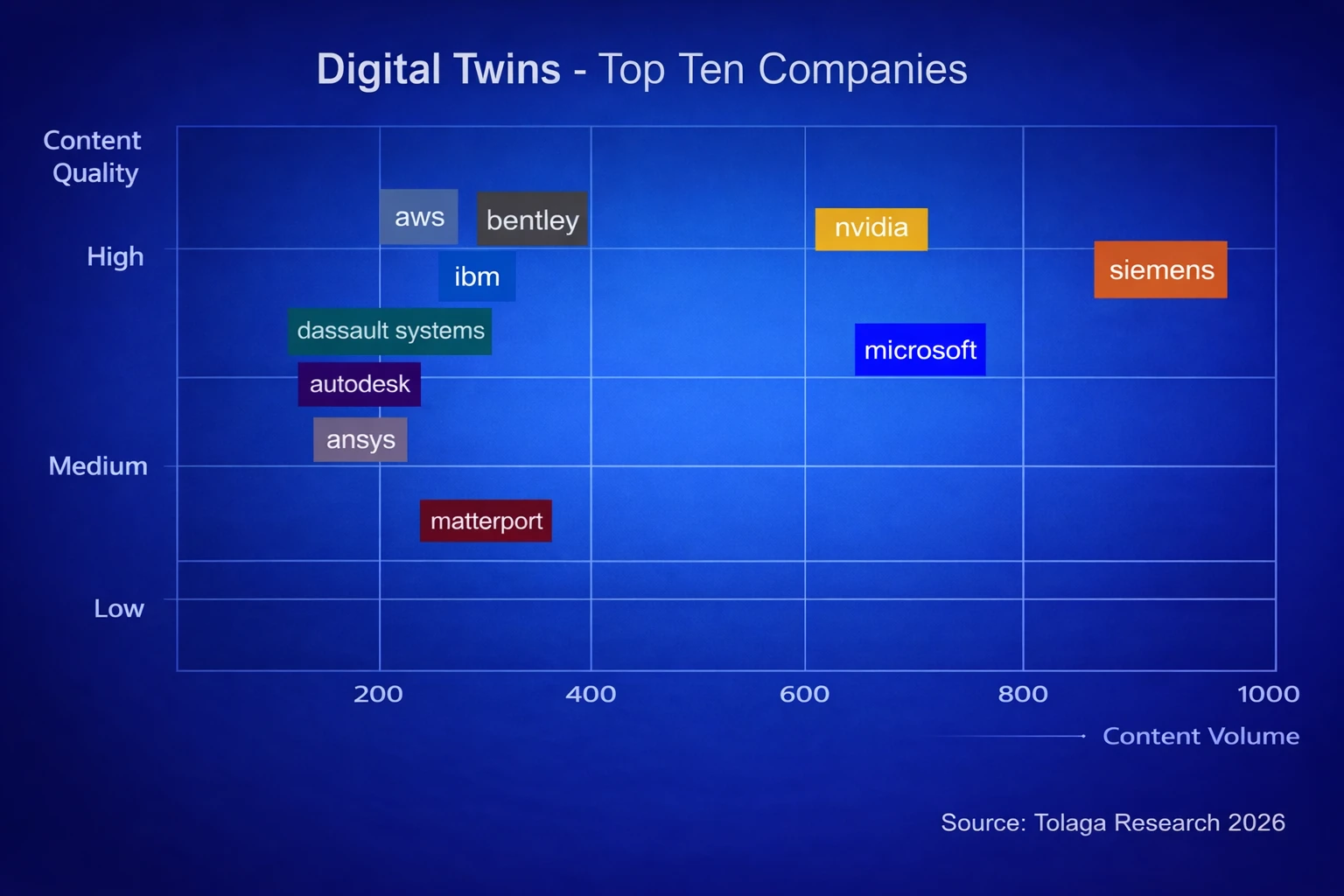
As shown in the chart, Siemens demonstrates the strongest overall activity across industries, with a clear lead in manufacturing and energy and utilities, reinforcing its deep roots in industrial and engineering domains. Microsoft shows a more balanced profile, with meaningful activity across manufacturing, energy, healthcare, and AEC, reflecting its horizontal, platform-driven approach to digital twins.
Nvidia, while smaller in overall volume, shows concentrated activity in manufacturing and emerging areas such as simulation-driven environments, aligning with its positioning in AI, robotics, and high-performance computing.
Across all three players, manufacturing stands out as the dominant industry, followed by energy and utilities, highlighting where digital twin adoption is most mature and commercially established today.
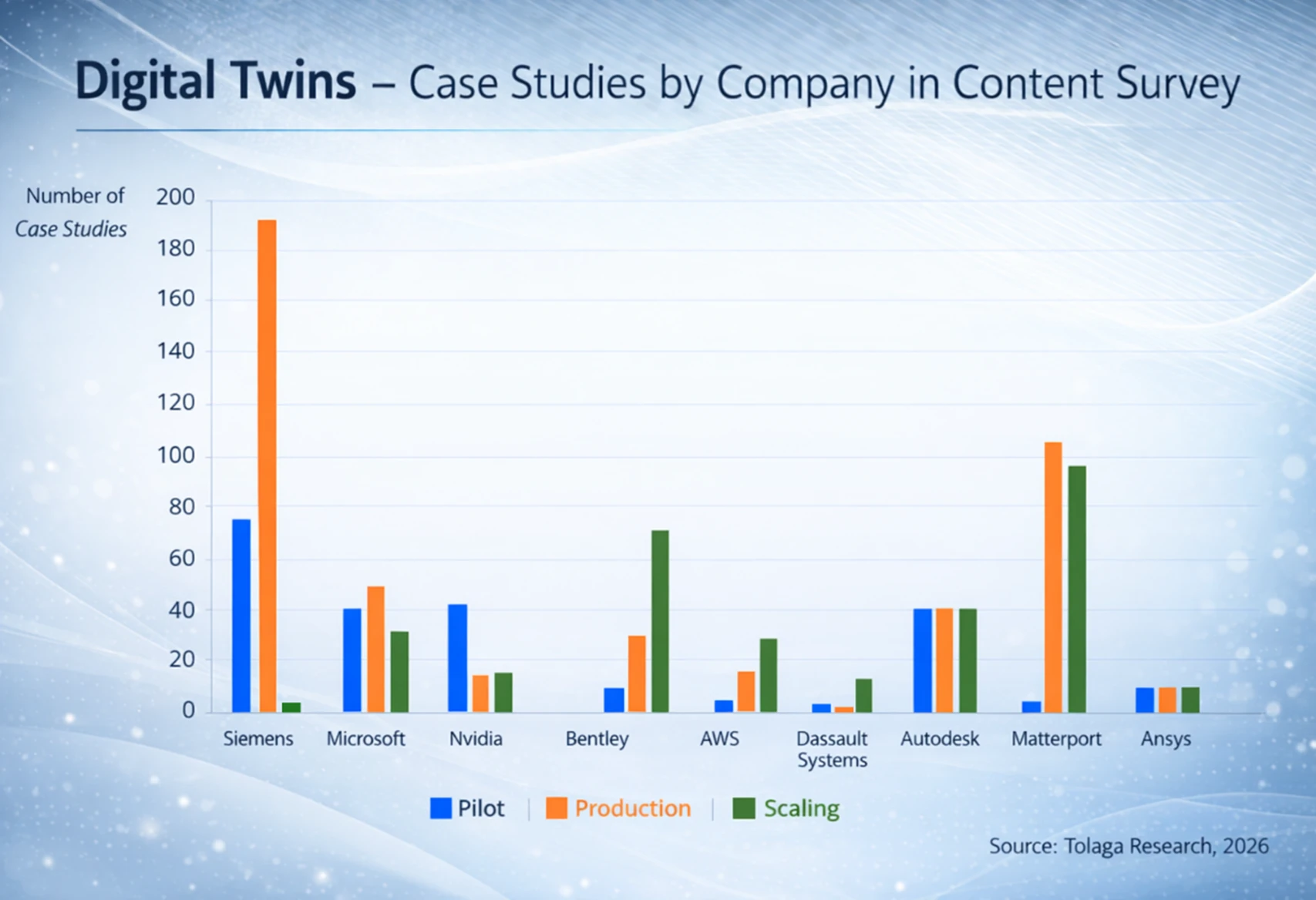
The distribution of case studies highlights clear differences in deployment maturity across vendors. Siemens stands out with a high volume of production deployments, indicating strong commercialization and established customer adoption, particularly in industrial markets. Microsoft shows a more balanced mix across pilot, production, and scaling stages, reflecting its role as a horizontal platform supporting a wide range of enterprise use cases.
In contrast, NVIDIA's activity remains more weighted toward pilot and early-stage deployments, consistent with its focus on emerging AI-driven simulation environments. Vendors such as Bentley, AWS, and Dassault Systèmes show a stronger skew toward scaling initiatives, suggesting growing traction as projects move beyond initial pilots. Meanwhile, Matterport’s high level of production and scaling activity reflects a more focused, use-case-driven approach, particularly in spatial and built environment applications.
Overall, while production deployments are increasing, the continued prevalence of pilot and early scaling projects indicates that the digital twin market is still transitioning from experimentation to broader operational maturity.
The digital twin market is entering a critical transition phase. While attention continues to grow rapidly, driven by AI, cloud, and IoT advancements, adoption remains uneven and concentrated among early adopters. The gap between market interest and real-world deployment highlights an industry that is still maturing, with pilots and early-stage implementations dominating the landscape.
Manufacturing has emerged as the clear leader, providing the strongest evidence of commercial value and deployment maturity. Other sectors such as energy, AEC, healthcare, and aerospace are gaining traction, but adoption remains more fragmented and use-case specific. This reflects both the versatility of digital twins and the challenge of scaling across diverse industry environments.
The competitive landscape is being shaped by a small number of dominant platform providers. Siemens leads in industrial depth and production deployment, Microsoft offers a broad, horizontal platform approach, and NVIDIA is driving innovation in AI-led simulation and emerging autonomous systems. These players are helping define the direction of the market, but also reinforcing the importance of ecosystem alignment.
Looking ahead, the role of digital twins will increasingly be determined by their integration into broader AI-driven technology stacks. As agentic AI and automation advance, digital twins must evolve from standalone concepts into embedded layers that enable real-time decision-making and autonomous operations. Providers that fail to articulate this role risk becoming obscured within larger platforms.
To reach an adoption inflection point, the industry must shift its focus from awareness to outcomes. This includes increasing the visibility of production deployments, demonstrating measurable business value, and improving interoperability across systems and domains. Greater alignment around common use cases, supported by AI and sustainability initiatives, will be critical to unlocking scale.
Ultimately, digital twins remain a high-potential but still emerging market. The next 24 to 36 months will be pivotal in determining whether they achieve independent strategic relevance or become subsumed within broader digital transformation and AI narratives.